Dreamcore, Y2K, and Nostalgia
By Audrey Wang
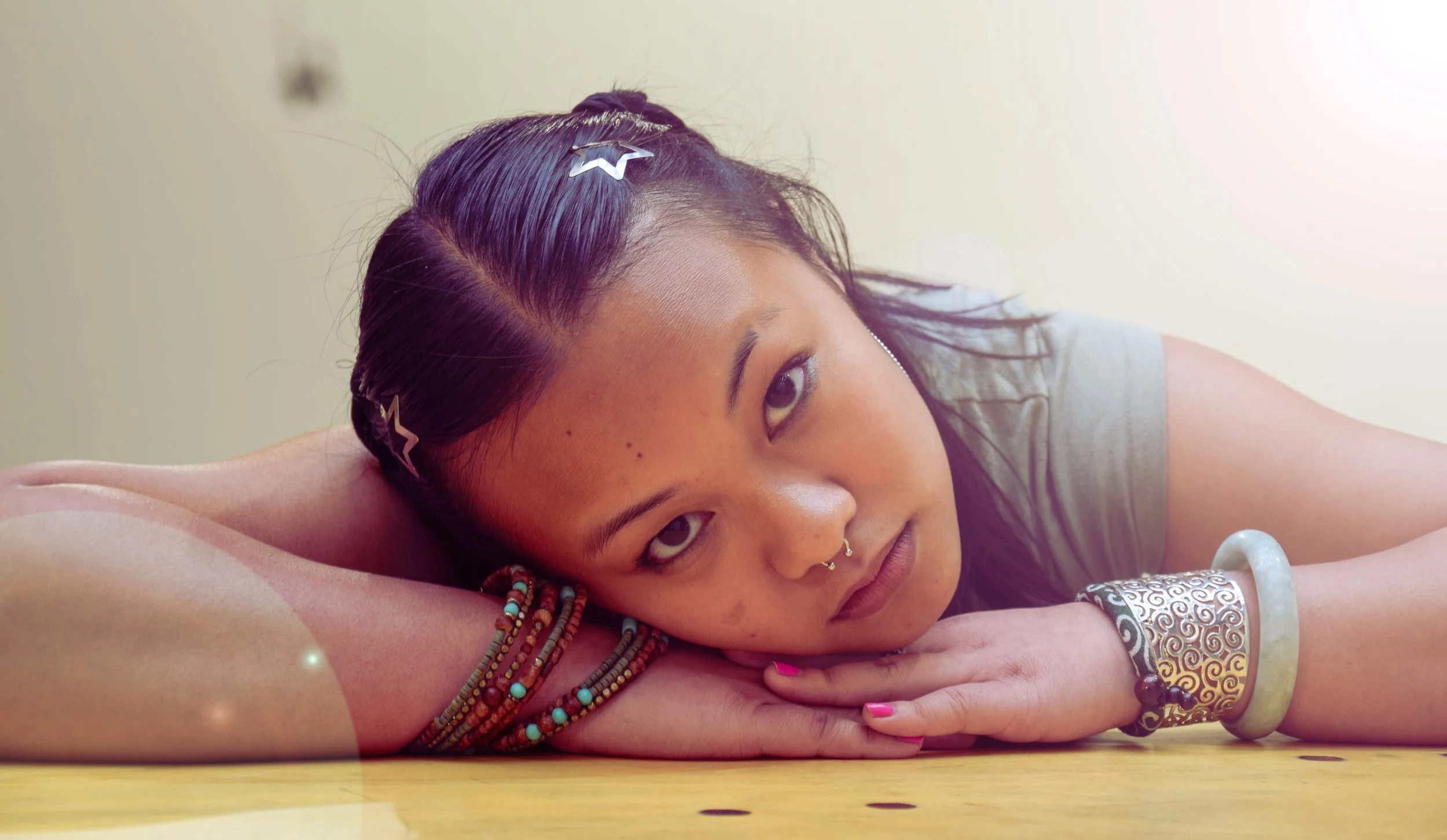
Photo by Kelly Youngman
“Core aesthetics” and Y2K aesthetics are among the most notable developments online in recent years. Like a colorful refraction from the prism, they added a special flavor to a predominant black and white fashion trend. Prominently featured as recognizable visual languages that people can use to convey particular moods and cultural attitudes through a shared or collective memory, dreamcore and Y2K aesthetics are like a collective reminiscence that is experienced by the young generation.
Often computer-generated, dreamcore is composed of base components like liminal spaces or unrealistic terrain structures, to create a dream-like imagery for viewers to immerse themselves in. On the other hand, although it also aims to create a fantasy-like image, Y2K, as a fashion genre, focuses more on the metallic texture and contrasting colors instead. By reinterpreting and reviving visual elements from the early 2000s, the trend blends these icons with futuristic imagery and familiar environments. Arguably, the aesthetics both rely heavily on nostalgia and subtle imagery shared by generations. Through a sense of the uncanny and mystified, the creators aim to evoke people’s awareness of things we now take for granted, and the privilege we enjoy without knowing. The reminiscence of the early 2000s is also like a call for returning to the essence and getting rid of all excess embellishment. The rising popularity of Dreamcore may reflect nostalgia's amplified role in digital culture, driven by the need for emotional comfort and connection amid global uncertainty of the emerging hyper-competitive and commercial perfection in current society.¹ People never stop and look back, refuse to admit the sense of fragility, and the result-oriented culture.
The origin of the dreamcore and Y2K aesthetics is hard to define, but like many other contemporary aesthetics, it is possible that the core aesthetics also draw inspiration from earlier artistic movements such as surrealism. Surrealist artists such as Salvador Dalí and René Magritte explored the boundaries between dreams and reality through symbolic imagery and unexpected visual juxtapositions. Like the famous The Persistence of Memory,² Dalí depicts familiar objects, the clocks, in an unusual and dreamlike environment, creating something recognizable but unsettling for the viewers to ponder by blurring the boundaries by providing a “pseudo-reality.” The twisted clocks with a non-rigid texture symbolize the impermanence of time and memories, showing a different perspective to gaze at the relativity of time and space. Echoing this characteristic, dreamcore too, focuses on the psychological experiences and emotional responses, showcasing ordinary scenes like vacant childhood playgrounds or dead shopping malls in an unusual lighting or low-pixel visual condition, to induce a sense of connection while slightly discomforting viewers with alienation from reality.³ Similarly, the Y2K aesthetic conceptualizes this nostalgia by using techno-like textures to draw viewers back into early-2000s memories, while also creating a sense of distance through bold color blocking. This, in turn, leads to the commonplace sensibility of changing trends and the related forms in culture, consumption, and technology.
A pop culture symbol of the core aesthetics is the K-pop girl group named NewJeans. Debuted in 2022 from ADOR, a sub-label of Hybe, the group was known for the merge of young nostalgia and contemporary digital aesthetics by their use of lo-fi visual textures and early 2000s cultural references. Most notably in the official music video of their single “Ditto,”⁴ the video deliberately adopts a handheld camcorder style, grainy footage, and unstable framing to create a sense of authenticity, as if the story is something that actually happened in someone’s memory instead of a simple music video. Divided into Side A and Side B, the music video presents the events from two different perspectives. By creating a sweet dream in which the five members of NewJeans exist as the best friends of the protagonist in Side A, the second part of the story reveals the plot twist that they are actually projections of the protagonist’s imagination and emotional desires. The narrative creates an illusion and overturns it, echoing the core concept in the core aesthetics: the collapse of the boundary between dream and reality. The imaginary companionship becomes real through the camera lens, illustrating how projections and memories can shape people’s perception of reality. The integration of nostalgic visual language and surreal narrations builds the unique characteristic of NewJeans, making them a concentrated embodiment of core aesthetics in pop culture.
Fashion designers have also engaged closely with these aesthetic movements. Designers such as Simone Rocha and the youth-focused brand Heaven by Marc Jacobs also incorporate symbolic elements like bows and wing-like structures into their collections, drawing motifs based on a nostalgia for the early-2000s and digital aesthetics. The playful graphics and references to early digital culture create romantic, dreamlike silhouettes that echo dreamcore’s emphasis on fantasy and emotional symbolism.
Fashion aesthetics are not just a part of clothing but also a symbolic form of communication and social expression. Through clothing and visual styling, people can freely express the identities and values they hold tangibly. For example, the wings Anna Sui brought to Heaven's 2023 Spring collection represent freedom or escape;⁵ metallic materials utilized by Paco Rabanne in his signature collections rewrite the rules of fashion, and bring the contrast between traditional and futuristic.⁶ Therefore, the core aesthetics are also subtle forms of resistance. Under the pressure from multifacets in society, generations often face socio-economic pressures, including academic and professional expectations. The ideal of “striving for perfection” driven by consumer culture, due to the large-scale issues such as economic uncertainty and political conflict, makes distinctive designs ways for people to envision different possibilities and express hope through unique designs. In such an environment, nostalgic aesthetics are like a harbor of an alternative reality where people can escape and take a breath.
The rise of dreamcore and Y2K styles shows people’s inclination toward the combination of nostalgic and surreal imagery, also implying the concerns embedded in society. Artistic creation has always been a way for people to truly express themselves throughout history. Fashion and visual culture, as important parts of modern art, have also found their place in popular culture and self-expression. Enabling people to create unique styles, the new aesthetics offers a space for individuals to exchange identities, emotions, and imagination in this ever-changing world.
Endnotes:
1. Jia-Yu Song, Won-Ho Choi, and Ru Li. “What Makes People Like Dreamcore Aesthetics? The Role of Trait Nostalgia in Preferences for Dreamcore Imagery,” Sage Journals, https://journals.sagepub.com/doi/10.1177/02762374251356955.
2. Salvador Dalí, The Persistence of Memory, 1931, oil on canvas, Museum of Modern Art, New York.
3. Maria Gemma Brown, Nicholas Carah, Xue Ying (Jane) Tan, Daniel Angus, and Jean Burgess, “Finding the future in digitally mediated ruin: #nostalgiacores and the algorithmic culture of digital platforms,” Sage Journals. https://journals.sagepub.com/doi/10.1177/13548565241270669.
4. NewJeans, “Ditto,” music video, directed by Shin Woo-seok, December 19, 2022, YouTube, https://youtu.be/pSUydWEqKwE?si=VhfgBiwH_lxL0oyR.
5. Steff Yotka, “Anna Sui RESORT 2023,” Vogue, June 10, 2022, https://www.vogue.com/fashion-shows/resort-2023/anna-sui.
6. One Fashion Question, “Paco Rabanne: The Visionary Who Turned Metal Into Haute Couture | Fashion History,” video, YouTube, Jan 18, 2025, https://youtu.be/l6YODBnFZkg.