Dressing for the End of the World
By Emma Ewen
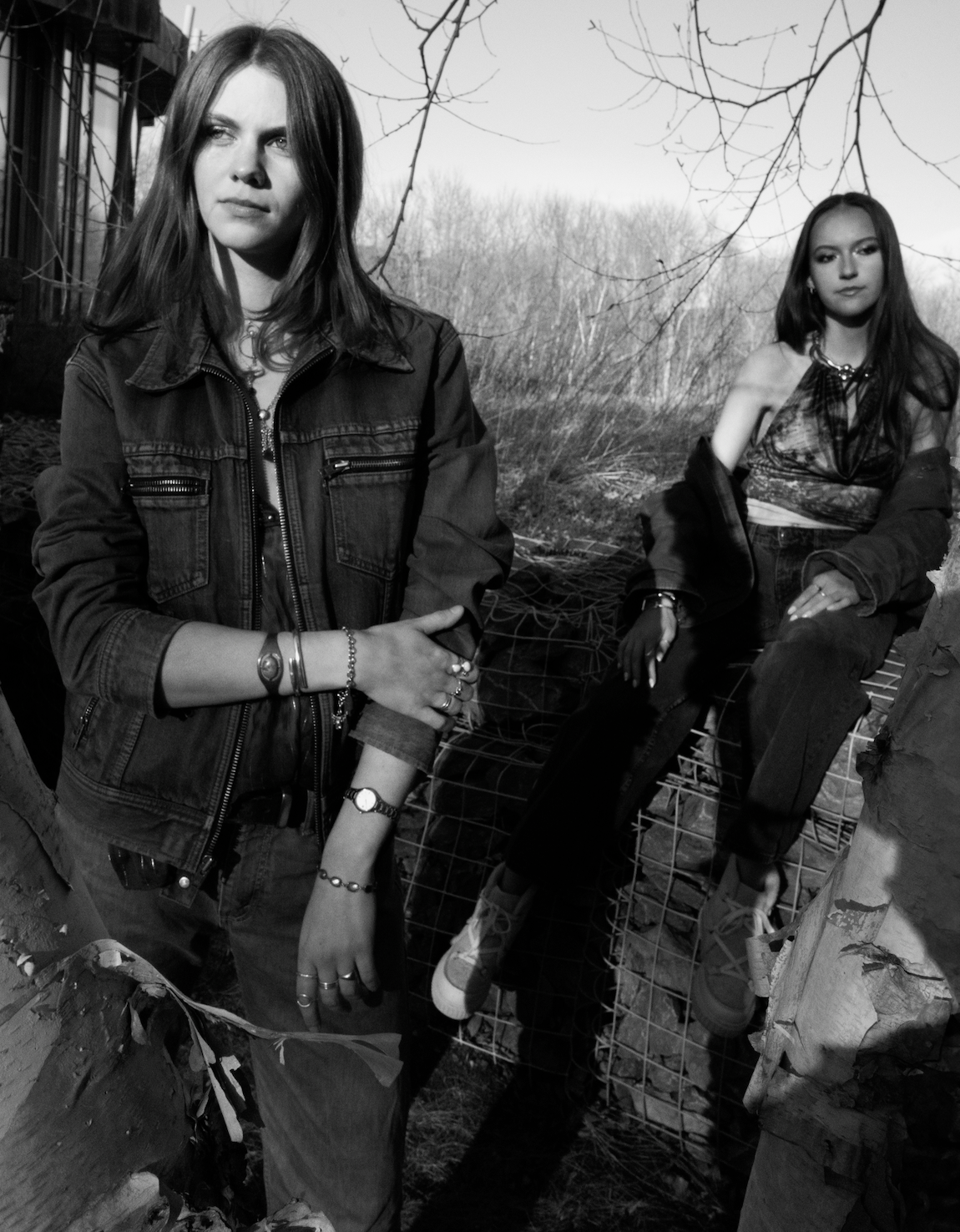
Chances are you've spotted someone on campus with a studded purse, hooded tank top, oversized cargo pants, or black platform boots. You might have simply brushed these off as micro trends, but in many ways they are actually tied to a dystopian future.
The science fiction genre presents an elaborate case study for examining how fashion reflects the collective mentality of society. It includes a vast list of subgenres: dystopian, steampunk, cyberpunk, apocalyptic, Y2K, to name a few. The cyberpunk subgenre in particular is often set in a lawless society dominated by advanced technology. Cyberpunk stories tend to display what has been described as “high tech, low life”.¹ What unites all of the subgenres, though, are themes of anti-establishment, rebellion, and tension between humanity and technological advancement.
The first feature-length science fiction film was Fritz Lang's 1927 silent film Metropolis. Its industrial imagery, themes of dehumanization, and design elements have served as the blueprint for subsequent sci-fi adaptations for almost a century: Star Wars: A New Hope (1977), Alien (1979), Blade Runner (1982), Dune (1984), The Terminator (1984), The Matrix (1999), Blade Runner 2049 (2017), and Villeneuve’s Dune (2021, 2024) are some of the largest.
In the 1980s, the avant-garde fashion scene began to see dark and technological changes. Alexander McQueen defined this shift most dramatically. In his Autumn/Winter 1999 show, McQueen unveiled robotic and circuit board suits marking a decisive pivot away from the space-age optimism of the 1960s and 70s.² McQueen's vision of the human body as a machine upset the fashion world. McQueen returned to these ideas in his Spring/Summer 2010 collection, titled “Plato's Atlantis,” which imagined a post-apocalyptic, post-climate change future. The show drew heavily from H.R. Giger, the Swiss artist whose eerie biomechanical style defined the visuals of Alien. Interestingly, Giger was brought on to design concept art for Alejandro Jodorowsky's Dune project that was never produced (if you’re interested, I highly recommend the documentary). It was this unrealized project that led Giger to Alien and Denis Villeneuve's later adaptation. Giger later collaborated with Supreme in 2014 and again in 2023, bringing his eerie, industrial style directly to streetwear and demonstrating the importance of science fiction art on the fashion world.
Rick Owens is another critical name in dystopian fashion conversations. Autumn/Winter 2024 collection mirrors the layered leather of The Matrix (1999) and Dune, much like the film-inspired lines of Yohji Yamamoto (2008) and Tom Ford (2019).³ Designer Craig Green was specifically brought onto Alien: Covenant, drawing on pieces from his Autumn/Winter 2015 collection. Jean Paul Gaultier designed over 1,000 pieces exclusively for The Fifth Element.
The Mad Max franchise deserves particular attention as what is arguably the most important series for science fiction wardrobing. Its costume designers, Clare Griffin, Norma Moriceau, and Jenny Beavan have shaped fashion through the rugged, post-apocalyptic style. Moriceau, who worked on Mad Max 2 and Beyond Thunderdome, was a direct friend and collaborator of Vivienne Westwood and Malcolm McLaren, and brought the punk aesthetic into the film’s post-apocalyptic costume wardrobe.⁴ The industrial machinery against the harsh, barren desert backdrop is comparable to another famous science fiction name I’ve already mentioned: Dune.
In David Lynch's 1984 Dune, costume designer Bob Ringwood crafted many pieces from repurposed industrial materials: harnesses, car hoses, and even used body bags. The stillsuits worn by the Fremen, made of black rubber with padded musculature and winding tubing, were described as tribal yet futuristic and arguably influenced later superhero costume design.⁵ Jacqueline West, lead costume designer for both of Villeneuve's adaptations, has discussed taking direct inspiration from Giger in constructing the Harkonnens’ signature style.⁶ Paco Rabanne's work greatly influenced Barbarella (particularly his medieval-inspired chainmail chestplate). In Dune: Part Two, Princess Irulan's look takes direct inspiration from these medieval chainmail pieces. Yet, Balenciaga's 2013 Dune Lambskin Mini Bag predated the Villeneuve film revival by nearly a decade, suggesting that the Dune aesthetic had already entered high fashion well before the films made it more mainstream.⁷
This overlap highlights a key distinction: costume designers use fashion as a tool to build a narrative world, while fashion designers lead a commercial enterprise to sell a vision. While separate, they frequently cross over; costume designers use labels to infer character, while their world-building often dictates retail trends, such as Mad Men’s influence on Banana Republic.
It would be impossible to discuss the world of dystopian media without considering the Middle East, North Africa, and Islamic influence. Especially with Dune. Frank Herbert's novel, published in 1965, draws on a range of cultural, religious, and political material: Islam, Buddhism, Judaism, Christianity, decolonization movements, American imperial ambition, and Indigenous tribes in the Americas,⁸ but as scholar Haris Durrani has argued, the “Muslimness” of Dune is seen throughout the novel and films in every aspect of the universe. Names like Feyd-Rautha, Mohaim, Liet-Kynes, Farad'n, Muad'Dib, and Lisan Al Gaib are inspired by Arabic. The words “Mahdi” and “Jihad” directly echo Arabic. Similarly, the Fremen religion of “Zensunnism” fuses Zen Buddhism and Sunni Islam. It also cannot be ignored that much of the production was shot in Jordan.
Villeneuve’s minimalist, brutalist, and earthy style is visually stunning, but, as Durrani and other critics have noted, the film adaptations tend to flatten the specificity of Herbert's cultural nods into generalizations that reproduce what Edward Said identified as orientalism: the Western romanticization, sexualization, and fetishization of the “Middle East” or “Muslim other.”⁹ The novel, in this respect, is partly critical of Paul as a white savior–a nuance largely lost in the translation to the big screen. The sensuality of Chani, the Fremen custom of multiple wives, and the lack of agency given to the Fremen are other particular points of concern. The challenge with choosing elements that represent or are inspired by Middle Eastern influences in dystopian media is that it can associate the region with futures that are corrupt, barren, and full of conflict, thus further promoting orientalist views that the Middle East is exotic, other-worldly, troubled, violent, and dangerous.
Orientalism runs through the costume design and into pop culture fashion as well. While headscarves and veils aren’t exclusively a Muslim practice, the hijab has become affiliated with Muslim women (or Arab women in general) in public perception, especially in the Western movie space. At the Dune: Part Two premiere in 2024 Anya Taylor-Joy displayed a long white veil reminiscent of a khimar that sparked debate over appropriation. Less controversially, Florence Pugh also wore a dress with head drapery. The conversation over celebrity dress and meaningful cultural representation is important to have because, as one analysis observed, “Hollywood is happy to celebrate the appearance of Muslim women, so long as it does not actually have to put them in movies”.¹⁰ There is an obvious lack of Muslim creatives featured in the Dune franchise.
It is not just high fashion runways, sci-fi classics, or North African influences that shape dystopian media, but also the tensions and anxieties of the time. With the Y2K panic, the 2008 economic crisis, the 2012 apocalypse scare, the rising climate change anxiety, the COVID-19 pandemic, and now the rapid public rise of artificial intelligence, young people especially experience fears over the future. Apocalyptic fashion is not new: utilitarian and survivalist clothing has appeared in waves throughout the twentieth century. But its current revival is driven by Gen Z's particular relationship to existential threat.
The Guardian has observed that while fashion tends to be cyclical, new technology creates exceptions, allowing new clothes to exist and enabling some of the most influential trends of the past century to emerge from new science.¹¹ The recent popularity and proliferation of Gore-Tex and technical fabrics, or “gorpcore” fashions, reflect young people’s desire to take a step out of civilization into extreme outdoor survival (or maybe just to parade their Arc’teryx getting a matcha). The dystopian franchises The Maze Runner, Divergent, and The Hunger Games instilled an early obsession with apocalyptic themes in young people. Later, Don't Look Up (2021) staged climate denialism as a dark comedy, Avatar used an alien ecosystem as a proxy for environmental devastation, and The Last of Us and Fallout turned post-pandemic and post-nuclear worlds into tv series.
The phenomenon of “method dressing” has further established this fashion-film partnership. Metropolis (1927), as previously mentioned, inspired Thierry Mugler's 1995 metal robot suit, a piece you may have recognized on Zendaya, who revived it for the Dune: Part Two red carpet premiere. Law Roach’s on-theme styling, “method dressing,” of Zendaya expanded the discussion of the film by connecting it to the fashion world. When Zendaya wore Mugler's robot suit to a Dune premiere, she kept both the film and the fashion in cultural conversation for weeks, months, and years afterward.¹²
Then there’s TikTok. Short-form content on social media reflects, replicates, and magnifies trends at a rate previous fashion print magazines never could. Influencers and celebrity culture further heighten the intensity of trends, and, with models like Bella Hadid wearing Matrix-esque black leather coats and slim black sunglasses, this “model-off-duty” look trickles down to consumers. Gen Z's well-documented obsession with being “niche,” “alt,” and “underground” also drives the appeal of dystopian aesthetics that signal a rebellion against the mainstream.
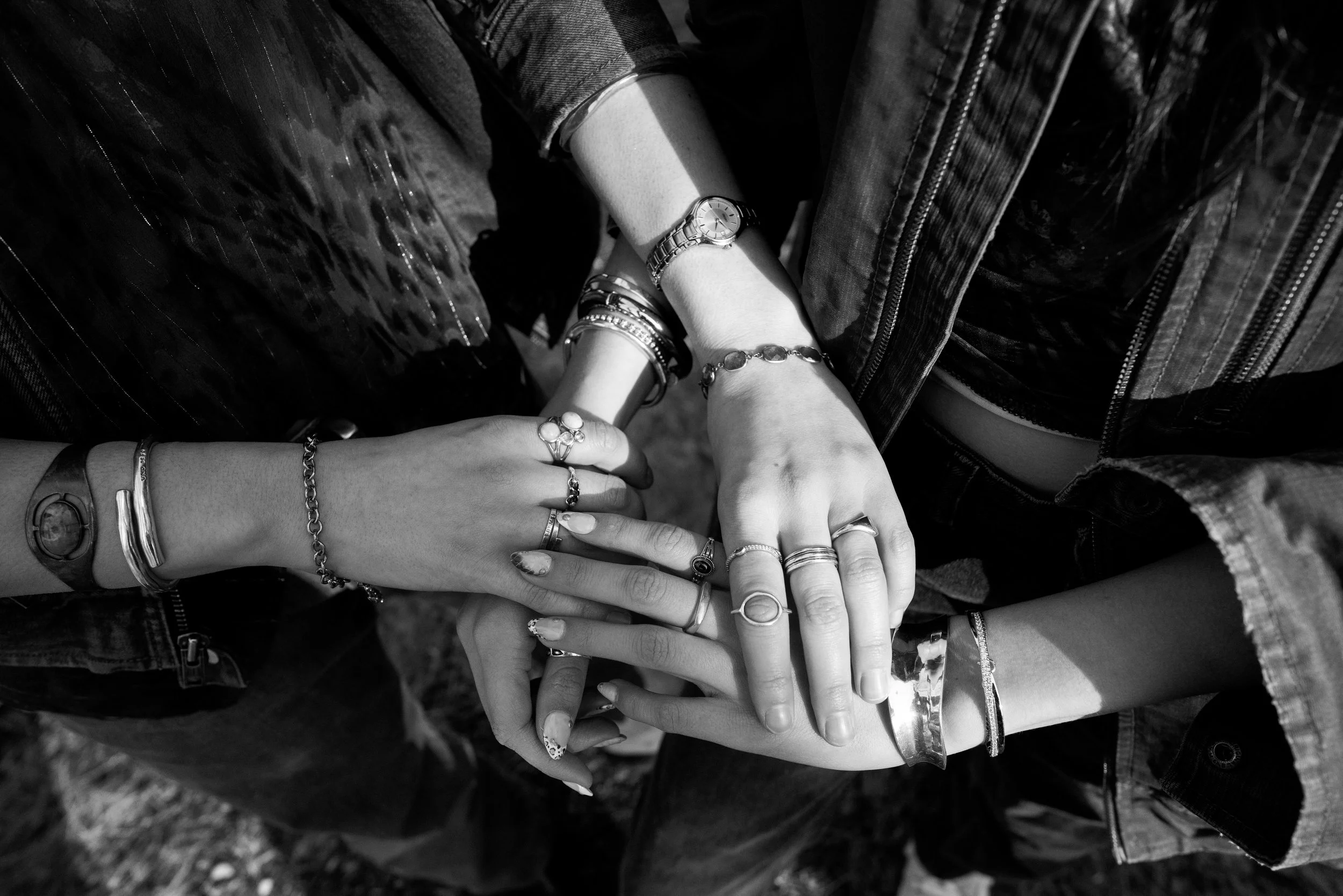
Avant-garde, couture fashion can feel really inaccessible (because it is), but its influences trickle down through the market. Hoods, cargo pants, face coverings, studs, large bags, boots, industrial silver jewelry, ripped and distressed fabrics, asymmetric cuts, slouchy fits, dark and neutral tones, balaclavas, and utilitarian pockets. Demobaza, a Bulgarian label whose identity is consistently post-apocalyptic sci-fi, released a collection timed to the first Dune release in 2021. Their world-building is deep and cumulative, building across collections. Grimes wore a Demobaza cloak in a photo of her reading the Communist Manifesto, a piece she claimed was inspired by Lady Jessica.¹³ At the 2021 Met Gala, Grimes also wore an Iris van Herpen gown dubbed “The Bene Gesserit”. Hamcus is a similarly elevated techwear brand, grungy and sci-fi inspired, with unusually deep world-building that extends across every collection. The brand has been featured in Star Trek: Discovery, Foundation, Rebel Moon, and Black Knight, confirming the relationship between fashion brands and on-screen productions. The Isabel Marant wedge sneaker, a design from the 2010s that has seen a dramatic renewed spike in popularity, is now being emulated by the new Puma wedge. Check out these more accessible brands for inspiration: Paloma Wool, Joelle, Gimaguas, Feners, Peachy Den, Nii Hai, Cerric, Psylos1, By Win and Gonggar Sport.
I initially began thinking about this article with the intent to state a claim about which influence came first: high fashion or science fiction. In reality, fashion and film are constantly building off of each other. Young people are drawn to aesthetics that acknowledge the uncertainty they face, and the art world reflects and amplifies those fears. There are so many more aspects worth exploring: the role of music videos, dance, video game design, or the growing influence of AI.
Yet, optimism shines through. I’ve recently noticed an increase in online fascination with the solarpunk aesthetic (another sci-fi subgenre). It imagines a hopeful future where humanity and the environment live in sustainable harmony. So maybe dystopian fashion is not dressing for the end of our world afterall, just a fictional one.
Endnotes:
1. Corbin, “Cyberpunk and Fashion | A Video Essay.,” YouTube, February 2021, https://www.youtube.com/watch?v=NJOmE167ON8&list=PLk7ZCmF2XkGAY0FevJJWhZftFnzBiJtdv&index=5.
2. wrong trousers, “Sci-Fi in Fashion,” YouTube, June 2024, https://www.youtube.com/watch?v=5O6rAFnti4g&list=PLk7ZCmF2XkGAY0FevJJWhZftFnzBiJtdv&index=7.
3. Alexis Schwartz, “The Best 'Matrix'-Inspired Fashion Over the Years,” L’Officiel, December 2021, https://www.lofficielusa.com/fashion/best-matrix-inspired-high-fashion-runway-street-style.
4. Grant Rindner, “Dressed for Dystopia: A History of Sci-Fi Fashion in Film and TV,” L’Officiel, March 2025, https://www.lofficielusa.com/fashion/futuristic-fashion-costumes-sci-fi-films.
5. Nacho, “Desert Couture: The Fashion Evolution of Dune on Screen,” L’Abbeye, December 2025, https://labbeye.com/article/desert-couture-the-fashion-evolution-of-dune-on-screen/?utm_source=ig&utm_medium=social&utm_content=link_in_bio.
6. Ramtin Arablouei et. al., “Bonus: The Deep History of Dune,” NPR, November 2021, https://www.npr.org/2021/11/08/1053621261/bonus-the-deep-history-of-dune.
7. Christin El-Kholy, “The Hijab Obsession in Hollywood and High Fashion,” New Lines Magazine, February 2024, https://newlinesmag.com/spotlight/the-hijab-obsession-in-hollywood-and-high-fashion/.
8. Barbara Brownie, “How sci-fi fashion has changed,” The Guardian, August 2013, https://www.theguardian.com/fashion/costume-and-culture/2013/aug/09/how-sci-fi-fashion-changed.
9. Lily Henning, “Method Dressing: The Friendship Between Fashion and Film,” A Magazine, September 2024, https://theamag.com/9898/culture/method-dressing-the-friendship-between-fashion-and-film/.