Seeing Red
By Harper Dorr
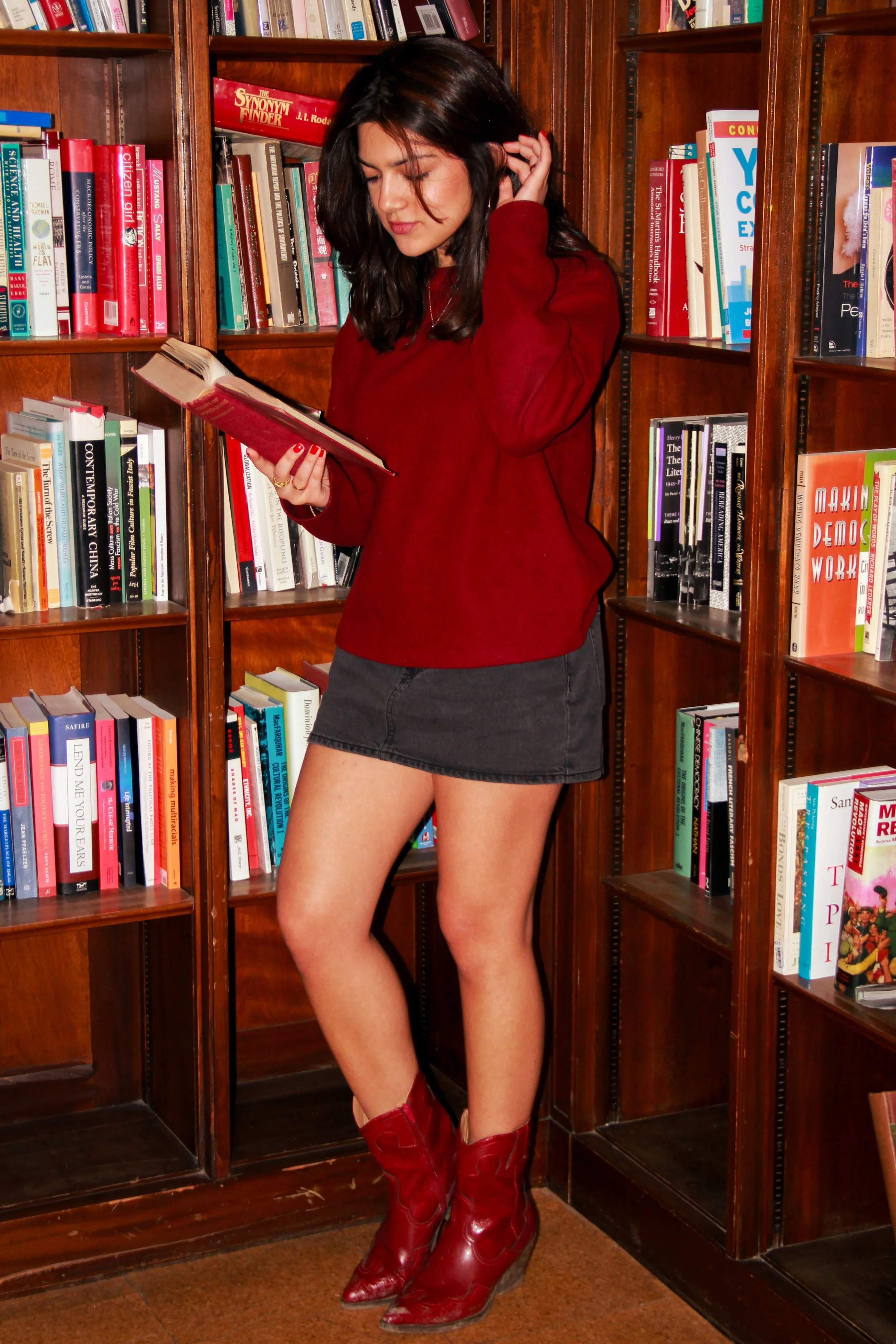
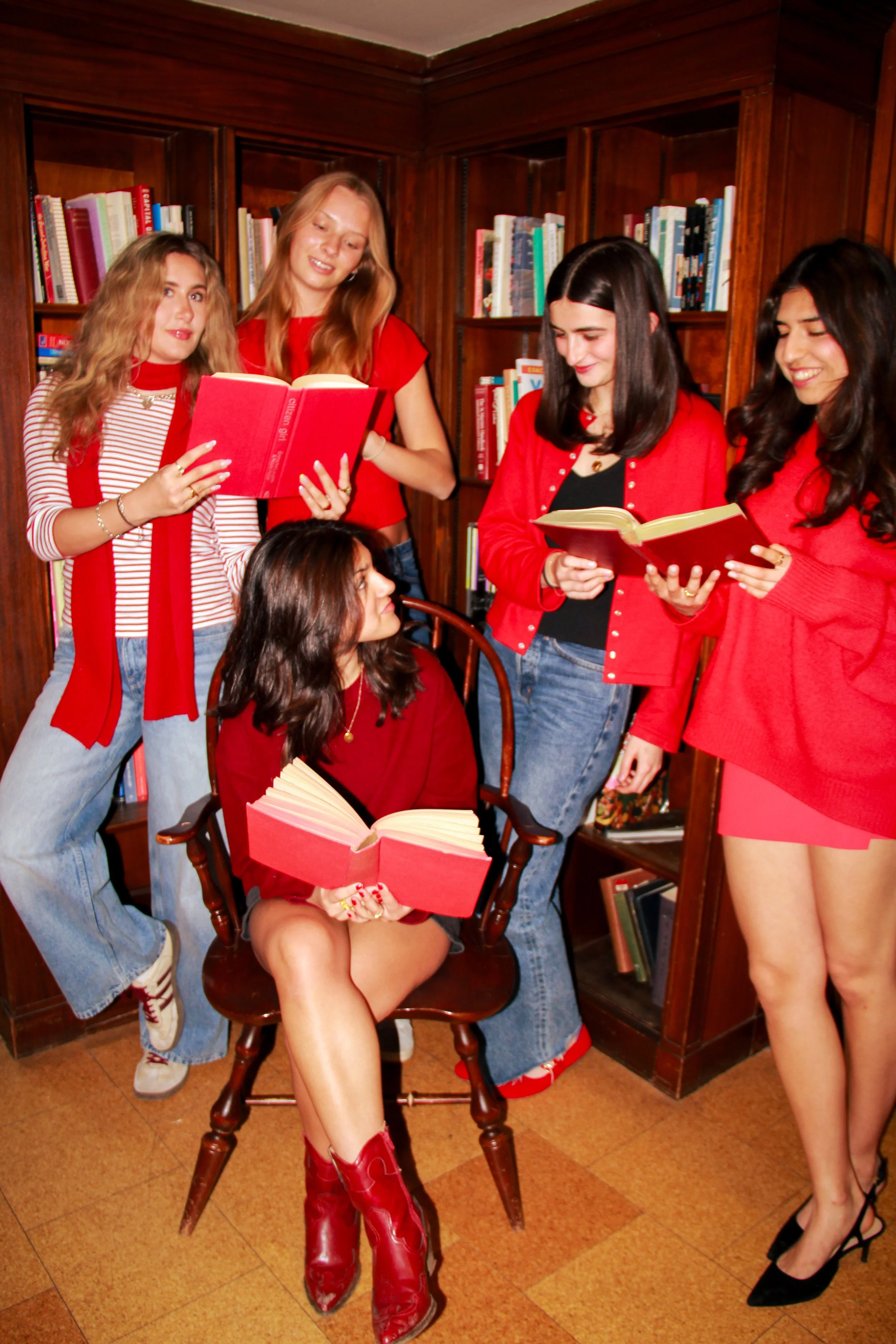
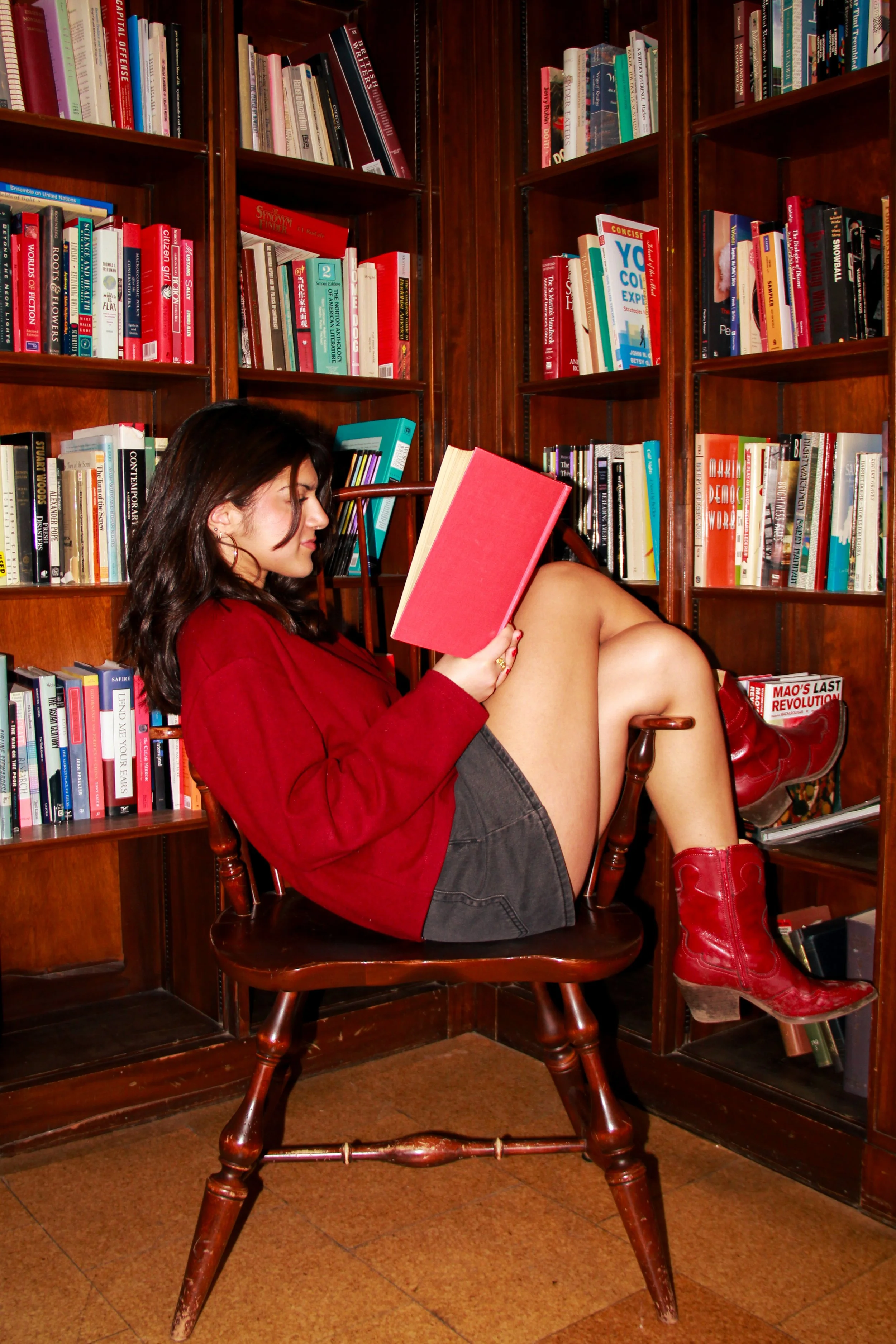
Photos by Annica Nassiry
Flashing colors have recently begun dotting runways and shelves. From candy apple to berry, one specific color that has been making a comeback in every shade is red. A color that initially rose to prominence in the 1940s and 50s, it has a long and fascinating history, but its most notorious forms come in the classic red lip. Red lipstick was seen as a symbol of rebellion and even used as a symbol of protest against the fascist Nazi regime during WWII, both in the US and abroad, as Hitler was famously opposed to it.¹ It was also seen as an expression of femininity and power during the suffragette movements of the early and mid-20th century, when women wore it during protests.² However, beyond direct movements, it stood as a symbol of non-conformity. Whether in lipstick, nail polish, dresses, or jackets, red was all the rage. This raises the question: what happened? During the 90s, the bright, bold colors and shapes of the previous decades fell out, and neutrals and simple silhouettes began to gain popularity as “effortless chic” came into style. In the late 90s and 2000s, with the rise of fast fashion, clothing became a representation of current micro trends. It was no longer a statement or expression of self, but a way of shifting to fit whatever was ‘in’, and soon red became increasingly scarce. That is, until the last few years.
The 2020s brought a new trend: slow fashion. With a resurgence in the popularity of thrift and vintage clothing, and with online platforms like Depop and Poshmark making it easier than ever to thrift from home, fashion began to return to its roots, and personal style was back in. The role of clothing was no longer to fit with current trends, but instead to stand out and express one's personal taste. Not only did personal style make a return, but the new generation—who care that their environmental values are reflected in what they wear—brought a new commitment to sustainability through vintage clothing. This turn to sustainability brought back many of the previous colors, such as red, and trends of decades earlier. Even on Pinterest, thrift and vintage clothing searches skyrocketed over 50% in the last two years.³ Slowly but surely, colorful pieces have begun to come back, and exciting patterns and unique clothing are becoming popular again. Red has become a trend not only in thrift but everywhere. Even in luxury markets, there was a 41% increase in red runway styles as of 2023.⁴ The return of red represents the resurgence of clothing as an expression of personal taste and style.
This rise in personal taste also makes us consider the difference between fashion and style. Capsule wardrobes and unique pieces have become something to flaunt that uniquely represent you and your style. Emma Chamberlain describes personal style as “intentional,” “timeless,” and “balanced,” capturing the draw of personalization through unique pieces and colors.⁵ Color also plays a large role in fashion; Marc Jacobs, in his doll collection, examines the power of style and color through silhouettes and accompanying flares of color, bringing play and fun back to the runway.⁶ Even Chanel’s new line boasts fun textures, layers, and a range of colors, especially bright crimsons and reds.⁷ The French fashion house Hermès has also been adding muted reds to its runway styles through blouses, skirts, and jackets, collectively showing the return to play, color and personality in style.⁸
Yet, the question remains: Is red here to stay? While nothing is definite, consistent trends over the last few years have demonstrated a strong and consistent rise in the color on the runway, and there is a clear trend of popularity on both Google and Pinterest. People want the return to style, color, and play. If the luxury industry is any indication, colorful, fun fashions are back and here to stay. Personally, I love the color. Not only is it very versatile, but it adds a fun twist to any outfit. Red can be classic, modern, and playful all at once, and color is an excellent way to find creativity in everyday pieces. Therefore, red is just the beginning of a changing tide in the fashion world—one that values experimentation and personal style.
Endnotes:
1. Colour Compass. “Red: What’s Driving Its Popularity and How Will It Translate Across Product Categories?” April 16, 2024. https://www.colourcompass.co.uk/colour-compass-blog/red-whats-driving-its-popularity-and-how-will-it-translate-across-product-categories
2. Pinterest, “Pinterest Trends: Thrift (United States),” accessed March 30, 2026, https://trends.pinterest.com/detail/?country=US&terms=thrift&hasPredictions=true&dateRange=730D.
3. Goldsztajn, Iris. “The History of Red Lipstick as a Symbol of Resistance.” Teen Vogue, June 27, 2022. https://www.teenvogue.com/story/history-of-red-lipstick-and-suffragettes.
4. Huber, Eliza. “I Tried the Viral Marc Jacobs Doll Shoes Everyone Is Talking About.” Who What Wear, February 24, 2024. https://www.whowhatwear.com/fashion/marc-jacobs-doll-shoes-review.
5. Bhatia, Billie. “Emma Chamberlain’s Top Fashion Tips and Tricks for Everyday Style.” Stylist, January 12, 2024. https://www.stylist.co.uk/fashion/emma-chamberlain-fashion-tips-tricks/1031802.
6. Chanel. “Fall-Winter 2026/27 Ready-to-Wear.” Accessed March 30, 2026. https://www.chanel.com/us/fashion/collection/fall-winter-2026/.
7. Hermès. “Women’s Fall-Winter Collection.” Accessed March 30, 2026. https://www.hermes.com/us/en/category/women/ready-wear/fall-winter-collection/
8. Scott, Fiona Sinclair. “The Bold, Bloody and Empowering History of Red Lipstick.” CNN Style. Last modified April 4, 2023. https://www.cnn.com/style/article/red-lipstick-history-beauty.