The Mixing Metals Debacle
By Hayes Littlefield

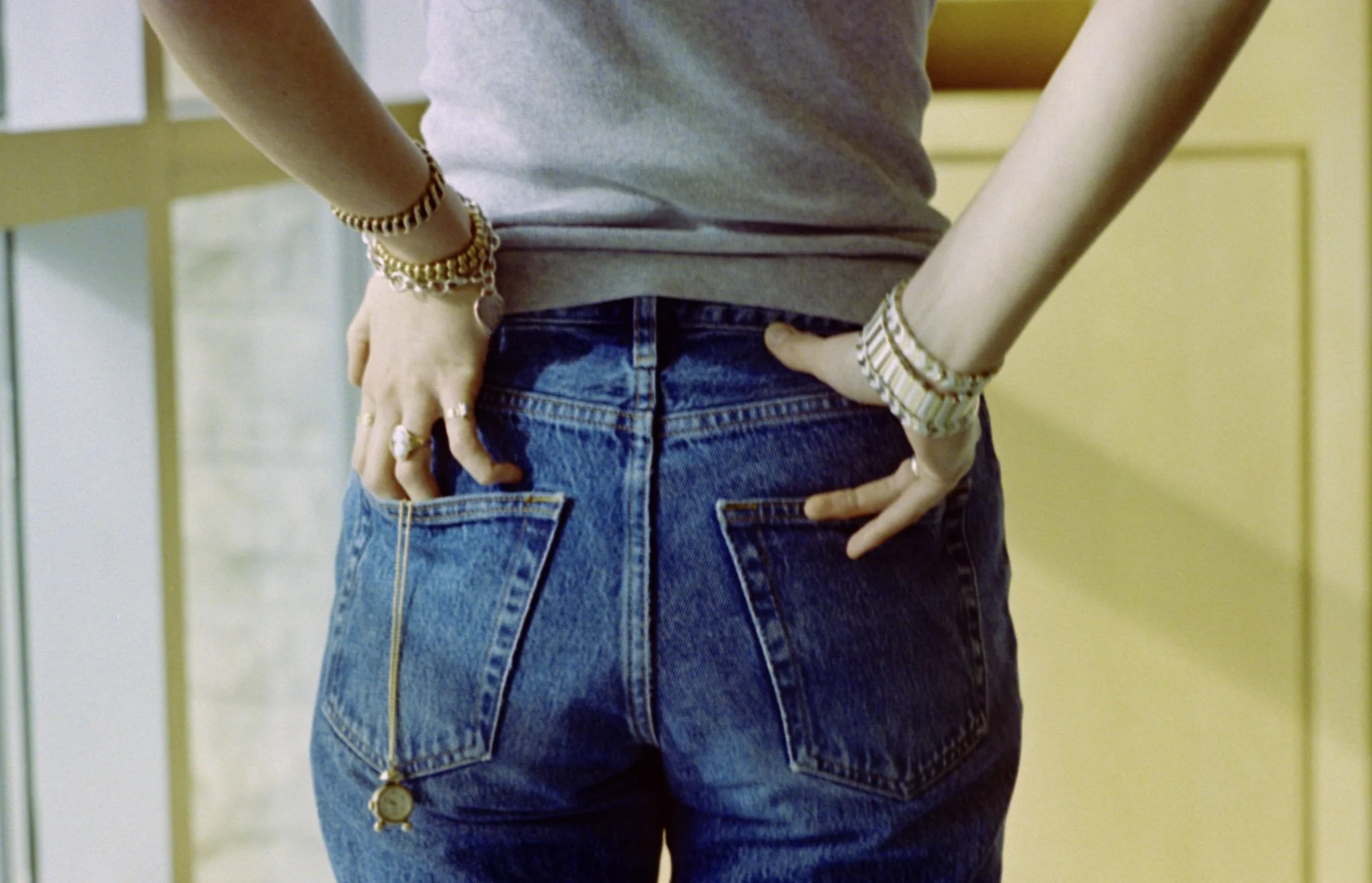
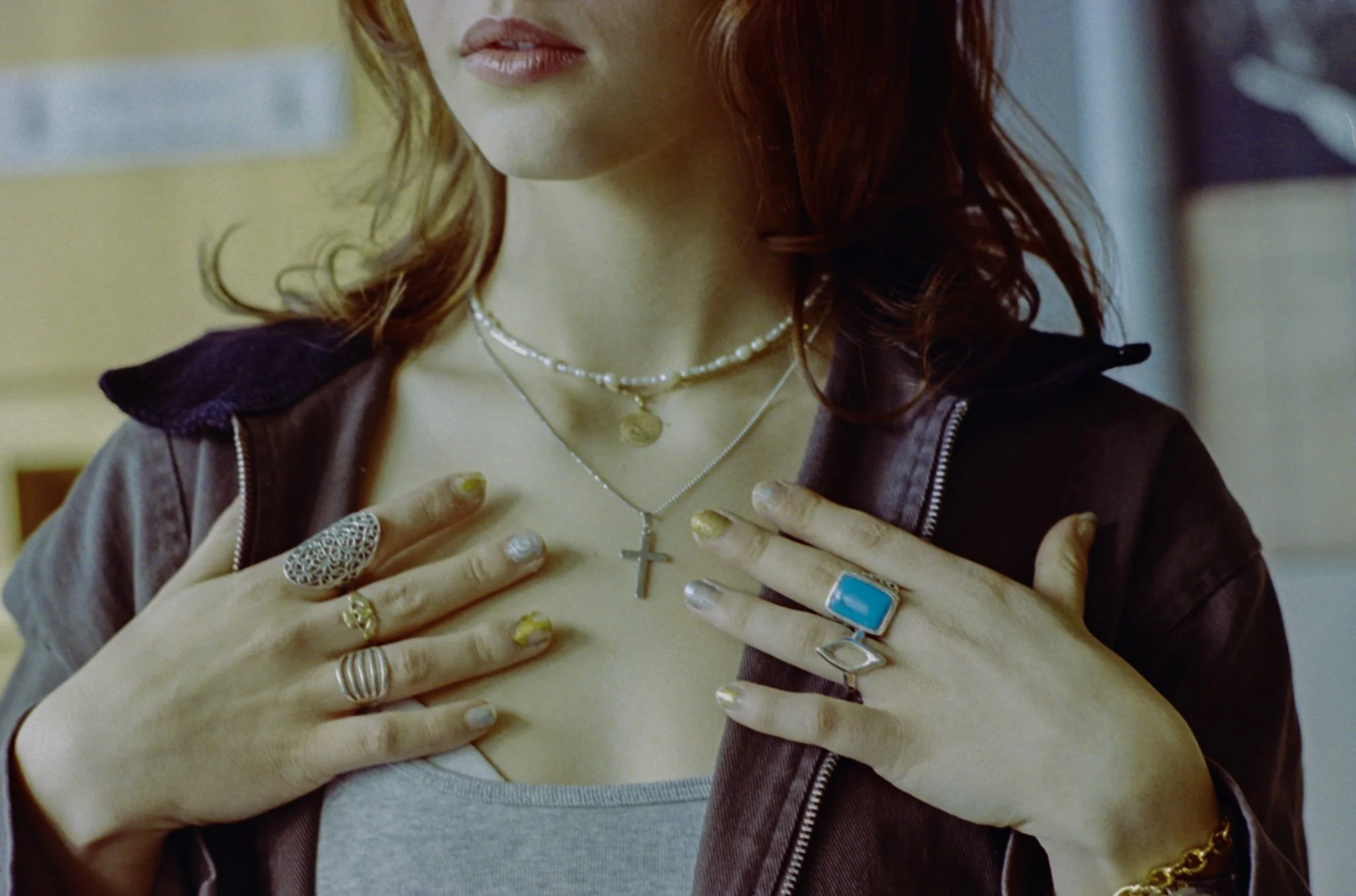

Photos by Caroline Tarmy
During my time in Madrid, I had the pleasure of living in a hostel just twenty minutes away from the most popular flea market in all of Spain: El Rastro. It was a world completely unfamiliar to me, characterized by rows and rows of rings, necklaces, and bracelets. I had never been one to wear jewelry, but cheap prices and sleek designs convinced me to explore. Each weekend I would race across the city, eager to turn down new corners and find new vendors in the never-ending labyrinth of sellers. My first ring cursed me. The perfect fit around my finger left me thinking each ring that was supposedly “the same size” would slide on just as effortlessly. I couldn’t have been more wrong, and the next few rings I bought ended up in my junk drawer, too tight or spinning loosely, a testament to my overconfidence. That’s when I learned that jewelry isn’t one-size-fits-all, even if rings are literally the same size. It demands attention and thoughtfulness. Not rigid rules or overthinking, but noticing how a piece sits and feels against your skin. Ring after ring was too loose on one finger or suffocating my circulation on another, so finding the perfect fit took some patience. Although many designs were repetitive, no two rings were exactly identical. Small tarnishes or imperfections gave each band a unique personality. Now that I had begun wearing jewelry myself, others’ pieces seemed to shine with a new clarity. Their pieces were no longer just accessories, but expressions that I had missed before.
While building my collection, I began to see an unexpected divide. When I tried to give someone a silver ring to commemorate our short hostel friendship, I was met with, “Thanks, but I only wear gold.” At first, I was hurt that they didn’t accept my gift, but I realized that I was more intrigued by their comment. Up to that point, I had been freely mixing metals, choosing pieces based on how they felt rather than adhering to strict rules. The idea that someone would limit themselves to a single metal felt somewhat strange. That moment sparked a question I couldn’t shake: why do people choose to wear certain metals over others?
The answer is not as simple as personal preference. The history behind this question unfolds in complex layers. The initial draw of gold and silver metals for jewelry stems not only from their beauty, but from their rarity and permanence. A heavier metal, gold’s malleability allows for intricate designs, while silver was cultivated for its ornamental prowess. As societies evolved, so did design. The incorporation of stones and gems turned basic shapes into intricate masterpieces. From the Middle Ages to the Renaissance, jewelry began to tell the stories of its bearers, weaving shared interpretations into the uniqueness of each piece.¹ From engagement rings to eternity bands, rings were more than accessories, they were representations of emotions, relationships, and aspirations.² Among the materials behind these emblems, none carries more meaning than gold.
Long referred to as “the metal of the gods,” ancient Egyptians believed that gold was the flesh of the gods, making it a central feature in their culture.³ When it comes to harmonizing an outfit based on the allure of the metals you’re wearing, yellow gold pieces tend to pair well with deeper blues, reds, and earth tones that emphasize its vibrance. Alternatives to yellow gold such as soft rose gold, bright white gold, and non-traditional black gold all bring breaths of fresh air to an outfit, creating distinctly personalized looks. Gold is unique in the sense that it can be the star player of an outfit (think large hoop earrings or a shiny watch) or it can blend into the outfit as a fundamental role player (minimalistic rings, a delicate necklace). As the yin to gold’s yang, the persistent luster of silver jewelry has made it a ceremonial staple.
Silver rings have followed a different historical path than their golden counterparts, shaped largely by the metal’s greater availability. While still valued for its beauty and shine, silver has long been more abundant than gold, making it easier for artisans to work with and for everyday people to obtain. Because of this accessibility, silver rings became a common form of personal adornment rather than a symbol reserved strictly for elites. Across different cultures, people wore silver rings to mark relationships, identity, or simple aesthetic preference. Over time, this widespread use gave silver rings a reputation for practicality and versatility. Today, that same accessibility has helped fuel a renewed appreciation for silver jewelry, particularly among younger generations who value its understated elegance and the freedom it offers for experimentation and everyday wear.
The association of gold and silver with status continued up until the Industrial Revolution, where mass production made pieces that were once designated only for the elites of society much more accessible to the common person. This abrupt shift in affordability and availability catalyzed a new era defined by individualism. While jewelry was once inextricably tied to wealth and status, the fact that it didn’t have to be, allowed for greater personalization of style. Deciding which rings to put on which finger and which necklaces go best with your outfit can be intentional choices, but the beauty lies in the acceptance of the fact that they don’t have to be. Jewelry can be worn to represent inner feelings, but it can also be worn simply because it makes someone feel good—they don’t have to know why in order to justify it.
The mixing metals debacle begins to unravel when you consider how much the meaning of jewelry has changed over time. What once signaled status has become far harder to read. With the rise of affordable materials and nearly indistinguishable alternatives, the line between what is “real” and what is not has blurred to the point where most people no longer try to tell the difference. In that uncertainty, jewelry loses some of its power as a marker of wealth, but it gains something more interesting in return. Instead of asking what a piece is worth, people begin to ask what it does for them. Mixing metals becomes a clear expression of this shift. What was once seen as improper or mismatched now reads as intentional, a reflection of personal taste rather than a violation of outdated rules. The value of jewelry no longer lies in its material alone, but in the way it is worn, styled, and interpreted by the individual.
Endnotes:
1. Herrera, Hansel. “Unearthing the Allure: The Journey of Gold and Silver Jewelry”Joyerias Paris, Dec 15, 2025. Unearthing the Allure
2. “Different Types of Rings and Their Meanings,” Monisha Melwani, Different Types of Rings and Their Meanings
3. “The History of Gold Jewelry: A Journey Through Time”, Lexaco, May 29, 2025, History of Gold Jewelry Through Time