The Aloha Shirt and the Paradise for Sale
By Sage Keller
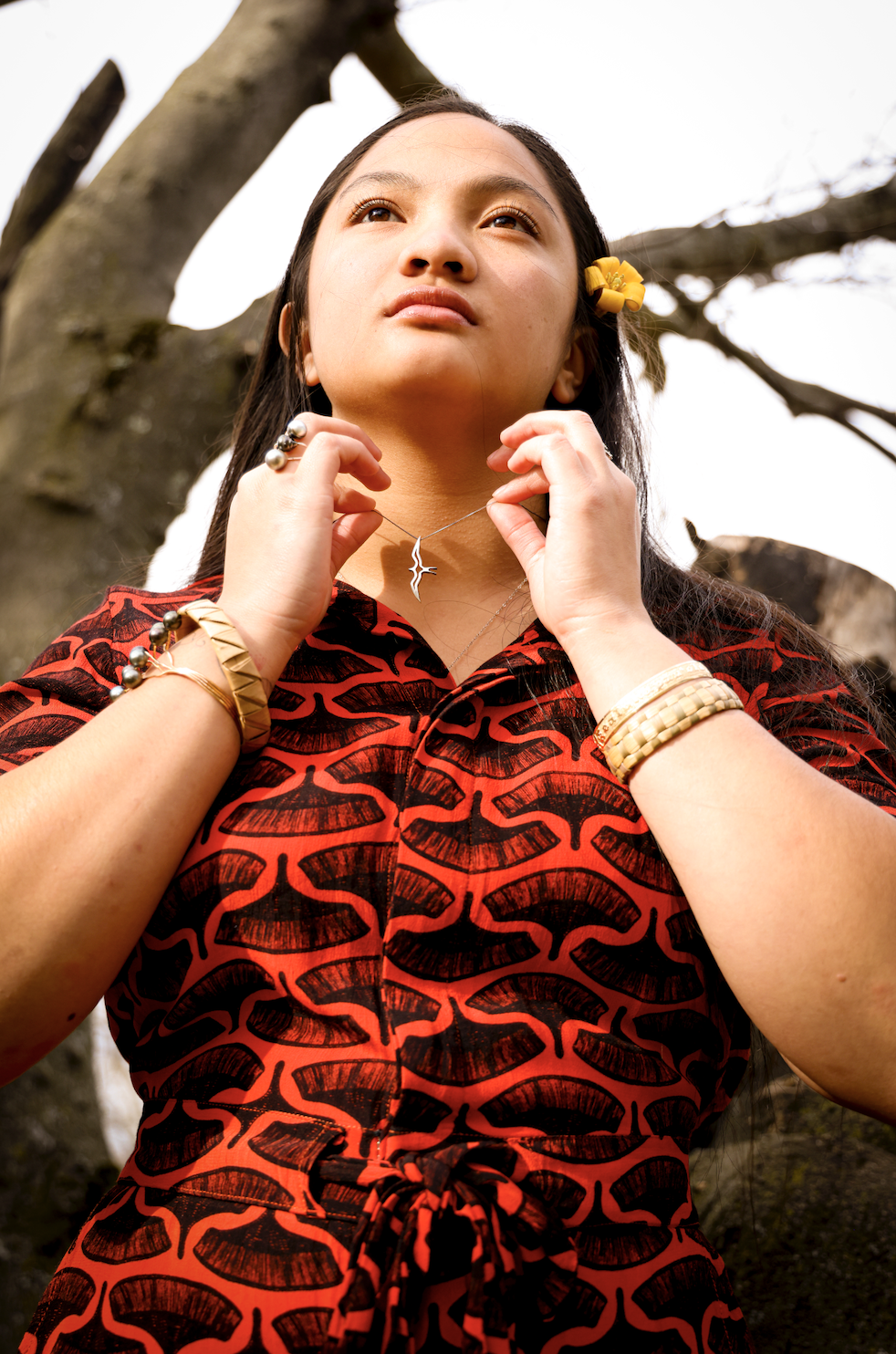
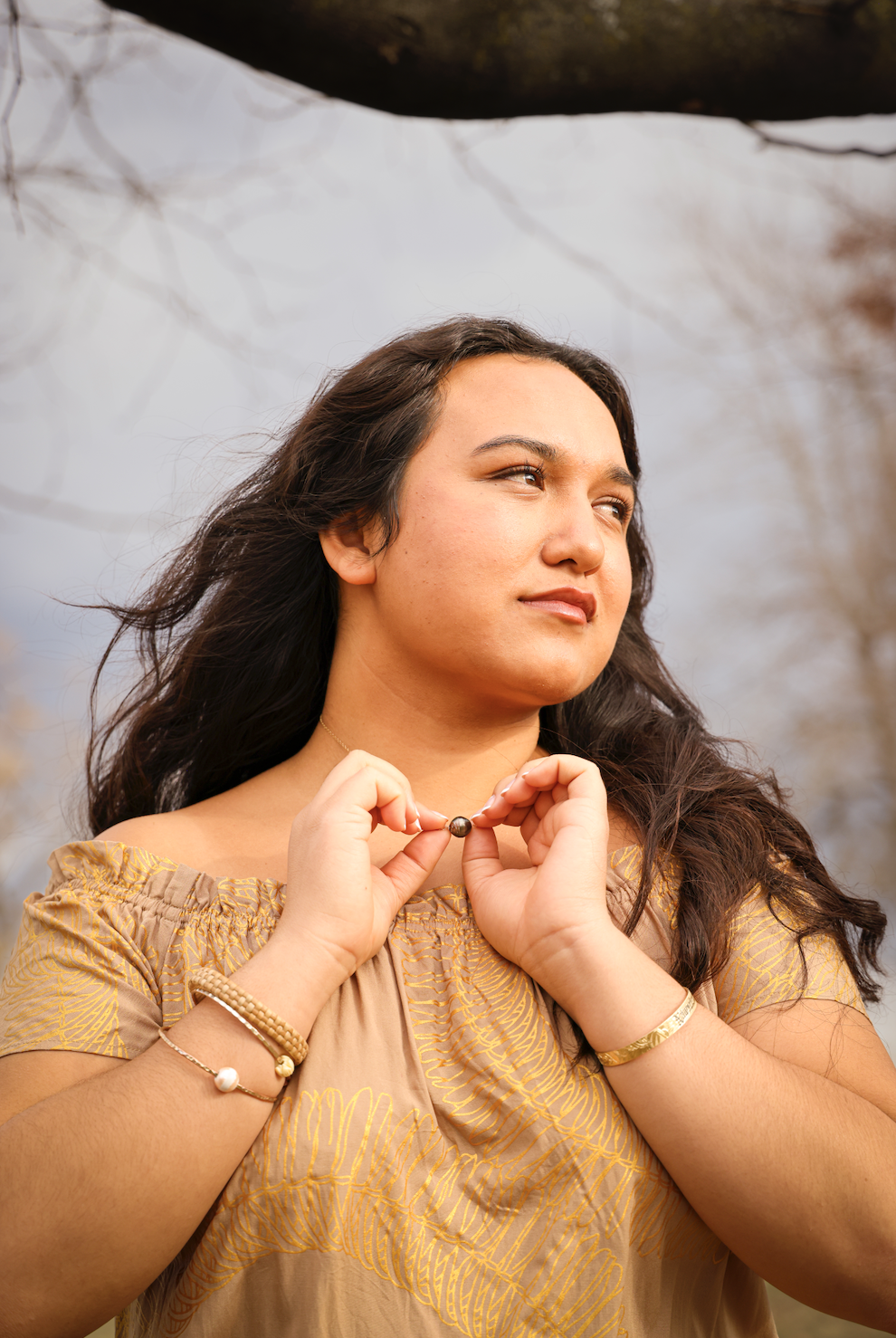
Photos by Annica Nassiry
Walk into any tourist shop from Waikīkī to Poʻipū and you will find it folded in cellophane, tagged at twelve dollars, printed with hibiscus and hula girls and palm trees that look like nobody’s Hawai‘i. Walk into any gathering on the islands and you will find it on every body in the room, bright and deliberate. Walk into the footage from the 2021 Oregon State Capitol protests and you will find it again, this time layered over tactical gear, beside assault rifles, worn by men who had come looking for a fight.
The aloha shirt has been handed to soldiers stationed in the Pacific, sold to tourists passing through Honolulu, copied by luxury brands in Paris and New York, and adopted as a uniform by far-right extremists who call themselves the boogaloo boys. It is one of the most recognized garments in the world, and one of the most misunderstood.
I grew up in Kīlauea, on the north shore of Kauaʻi, where getting dressed up meant reaching for the aloha shirt. Graduations, memorials, first days and last days, the same floral print worn by everybody in the room. The shirt that held all of that began somewhere most people never think to look.
Before it was any of this, it was something far more complicated. Textile historian Dr. Linda Arthur Bradley, author of Aloha Attire: Hawaiian Dress in the Twentieth Century and curator of the University of Hawaiʻi’s historic costume collection, traces its making to at least five distinct cultural groups.¹ Japanese merchants supplied the fabric, particularly a silk crepe imported and sold in Honolulu shops. Chinese tailors were almost always the ones constructing the actual garments. Hawaiian artists stamped original prints onto fabric by hand using linoleum blocks. Filipino immigrants contributed to the untucked tradition of the barong tagalog, a lightweight embroidered shirt worn outside the pants that had long been standard dress in the Philippines. And Western sailors introduced the loose pullover style that gave the shirt its basic shape.
No single community invented it. It emerged from the collision of cultures that defined plantation-era Hawaiʻi, a place where people from across the Pacific and Asia were brought to labor on sugar and pineapple plantations under conditions that were anything but harmonious. That origin story, messy, multiethnic and rooted in working-class life, is not the one that made it famous.
The legend of the aloha shirt was a deliberate construction. During World War II and throughout the Cold War, the US military coordinated with the USO, the United Service Organizations, a nonprofit that provided entertainment and services to American troops, to stage luaus and hula performances for service personnel stationed in Hawaiʻi. The events were photographed and the images circulated through armed forces newspapers and national magazines, presenting the islands as a tropical paradise of welcome and ease. The shirt was central to that staging, handed to soldiers, worn at beach barbecues, used to blur the line between soldier and tourist. Scholar Christen Sasaki, writing in The Contemporary Pacific, argues that this was never really about hospitality.² It was about making the military’s occupation of Hawaiʻi, which by the mid-twentieth century had made it the most militarized state in the country, feel natural and even idyllic by wrapping it in the language of paradise. National retailers followed the same logic, selling shirts with names like “Luau Print” and “Rayon Tapa” that mimicked Indigenous design without any connection to its meaning, often copying Samoan patterns and calling them Hawaiian, collapsing the entire Pacific into something easier to sell. Five cultures watched as the shirt was flattened into a postcard, all while they were written out of their own history.
Then came 2020. A loosely organized far-right movement called the boogaloo boys, whose name references a racist internet meme about a coming civil war, began showing up at protests across the United States wearing aloha shirts over tactical gear and carrying assault rifles. The movement drew from white nationalist, anti-government, and militia communities, united by a belief that American society was headed toward violent collapse. To many observers, the pairing of floral print and military-grade weapons seemed almost comedic, an innocent garment caught in the wrong crowd. That instinct to defend the shirt, to say it belongs to beach days and summer vacations and nothing darker than that, is exactly what Sasaki’s work pushes back against. The paradise image that the military and tourism industry spent decades building was always a vision of Hawaiʻi as a place that existed for white America’s consumption and possession, and the boogaloo boys, whether they knew it or not, were dressed for exactly that.
But the shirt has never belonged only to that story. For decades, Native Hawaiian designers have used aloha wear to make a different statement. Craig Neff and Luana Busby-Neff of the Hilo-based Hawaiian Force have been making shirts since 1984 that carry explicit cultural and political meaning, including designs worn by the thousands of people who gathered on Mauna Kea beginning in 2019 to protect the sacred summit from the construction of a massive telescope.³ Their he‘e aloha shirt, featuring the octopus as the kinolau, or physical embodiment of Kanaloa the Hawaiian god of the ocean, sits in museum collections around the world. It is not a souvenir.
Designer Manaola Yap draws on ‘ohe kāpala, a traditional Hawaiian stamping technique using hand-carved bamboo over a thousand years old, to create couture shown on international runways.⁴ His 2017 New York Fashion Week Mourning Dress was made entirely in black to honor Queen Liliʻuokalani, the last reigning monarch before the Hawaiian Kingdom was illegally overthrown in 1893 by American-backed businessmen with the support of US Marines. A woven mesh veil obscured the wearer’s face. Where the tourist industry used the shirt to perform paradise for outside consumption, these designers use it to speak directly to their own people, asserting a presence that the postcard version of Hawaiʻi was never meant to include.
The aloha shirt will keep appearing at airport gift shops and fashion weeks, at rallies and graduations, worn by people with entirely different ideas about what they are putting on. Most of them will never think to ask where it came from, who made it, or what was lost in the making of its image. That is not an accident. It is what happens when a garment gets separated from its people, when the story gets simplified until it can be sold. The question worth asking is not whether the shirt has been misused. It is: who has always had the power to decide what it means, and who has been fighting, stitch by stitch, to take that power back?
Endnotes:
1. Linda Arthur Bradley, Twentieth-Century Aloha Wear, lecture, Honolulu Museum of Art, August 14, 2024.
2. Christen T. Sasaki, “Making Sartorial Sense of Empire: Contested Meanings of Aloha Shirt Aesthetics,” The Contemporary Pacific, vol. 34, no. 1, 2022, pp. 31–61.
3. Sasaki, “Making Sartorial Sense of Empire.”
4. MANAOLA, “Our Story,” manaolahawaii.com, 2017, https://www.manaolahawaii.com/our-story/.