The Humble Cowboy Boot
By Lillian Clechenko
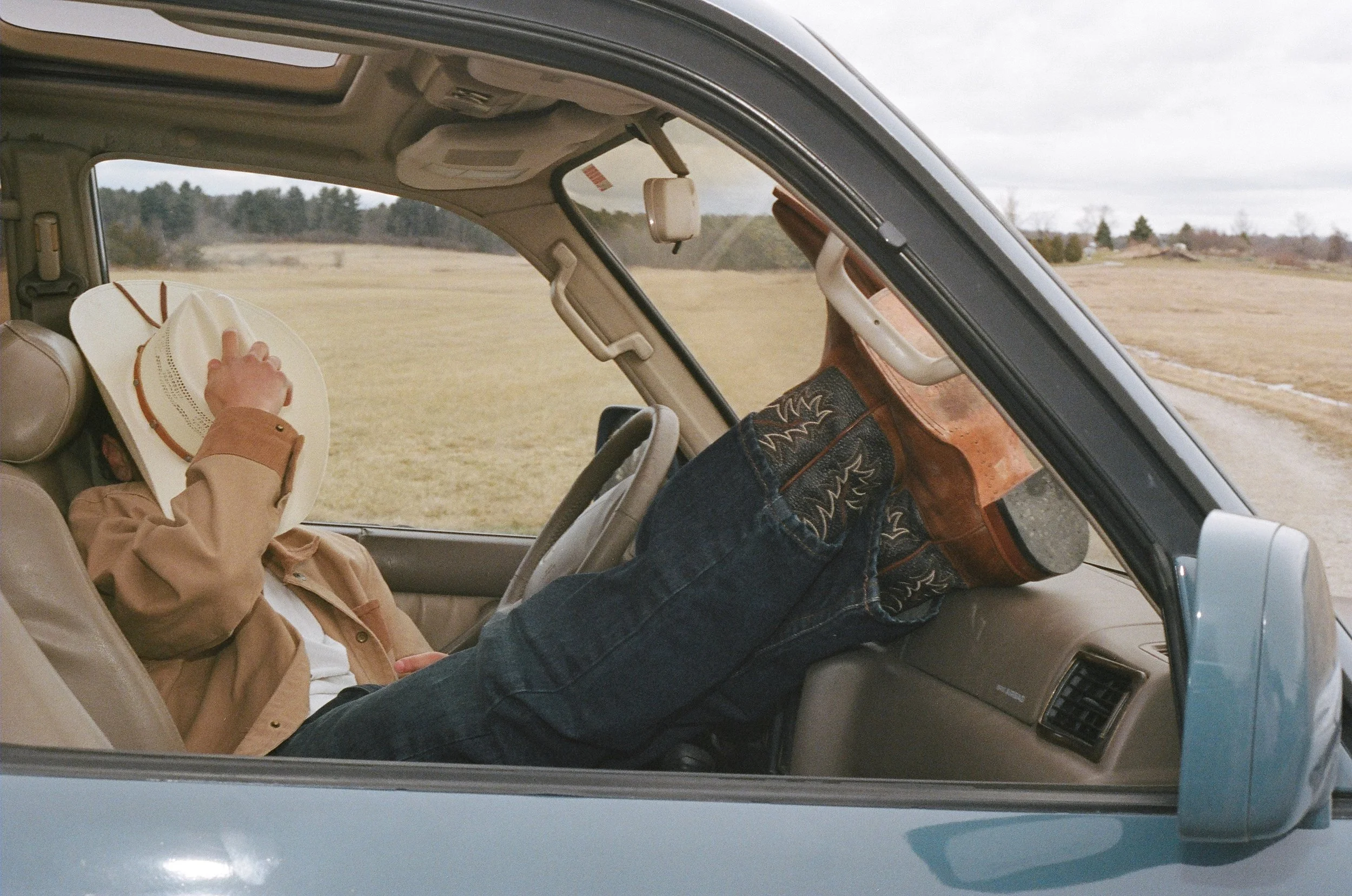
Photo by Willa Sullivan
These boots were made for walking…and dancing…and ranching…and honestly everything. The cowboy boot is one of the most recognizable pieces of Western wear, and now more than ever, it is having a moment in fashion. From the front rows at New York Fashion Week to city streets worldwide, they have proven to be an incredibly versatile shoe, continuously redefining trends and fashion cycles. For a shoe designed for ranching, how did a humble silhouette transform into a national symbol and a staple of modern fashion?
Pinpointing the origin of the shoe is not easy, as many cultures and eras influenced the cowboy boot’s modern design. In the early 13th century, Mongolian soldiers commonly wore boots with a stacked wooden sole and leather upper; English equestrians in the 1600s favored tall, heeled boots for riding, and by the 1800s, stacked sole boots were a staple for militaries across the world.¹ The design shift can be attributed to the American Civil War, as soldiers needed footwear that was both practical and durable. Although the silhouettes differ between the modern boot and its Civil War-era predecessor, similar features like higher angled heels and pointed toes—along with the eventual addition of steel shanks for stirrup support—create a clear lineage.²
The latter half of the 1800s were pivotal for shaping the silhouette we see today, in part thanks to the Vaqueros, the original ranchers from Mexico. Cattle ranching, a booming sector of the American economy, required a boot that could slip into stirrups easily, protect ranchers from snakes and brush, and withstand intense labor.³ Many of the Vaqueros were skilled leathermen, and pioneered the design of Western attire, such as chaps and saddles, but most importantly, boots. Western bootmaking took off, turning the cowboy boot into a tool: purpose-built and protective against a harsh lifestyle.
While many of the cowboy boots worn during this time were designed by the cowboys themselves, the first American store to sell cowboy boots to the public opened in Coffeyville, Kansas, in the late 1870s.⁴ Early pairs featured the classic pointed toe and tall shaft, but often had extra stitching, varying colors, and the occasional appliqué. Kansas bootmakers like Hyer Boots continued to refine the design, and as ranching culture thrived, the market further expanded.
Most notably, the "sister shoe"—the Cowgirl Boot—offered an adaptation tailored to female ranchers. These pairs often featured varying colors of leather, colorful stitching, floral designs, and shorter shafts. The Cowgirl Boot shared the same important characteristics of the cowboy boot—tough leather, high heels, and pointed toes—yet marked a shift in fashion as the western cinema genre grew, introducing the fashionable cowgirl aesthetic to the general American population.
Rodeos, which grew in popularity across the United States throughout the 20th century, also gave cowboy boots a massive cultural platform. In 2025, over 2 million people attended the Houston Livestock Show and Rodeo, the largest in the country, putting on a large display of boot styles. Exotics, such as alligator or ostrich skin, costing upwards of $10,000 are a common sight, as are the classic Tecovas or Lucchese. The sense of pride many have throughout rodeo season keeps the boots’ popularity alive, offering a space to celebrate craftsmanship, art, and culture.
Today’s cowboy boot transcends its origins, becoming a form of expression and a piece of fashion for many. Western references thrive in the designer world. Calvin Klein, Ralph Lauren, Mugler, and Marc Jacobs all famously tried their hand at incorporating iterations of the cowboy boot into their collections, launching their popularity into the mainstream fashion world, causing an all-too-common trickle down effect.⁵ Slowly, cowboy boots have infiltrated almost every corner of the fashion world, from high end to fast fashion.
The increased accessibility of boots via fast-fashion brands contributes to their success and simultaneously destroys their authenticity. The entire philosophy behind a true cowboy boot, of intention and craftsmanship, is the opposite of fast fashion. Where fast fashion prioritizes short lifespans and low cost, the cowboy boot was designed for a culture that valued quality above all else. Fast-fashion design is the antithesis of a shoe rooted in purpose and longevity, which begs the question: is it worth being trendy if values and quality are lost?
Despite these concerns, cowboy boots have never been more popular; today they are an everyday fashion essential. From college campuses across the country to music festivals and metropolises, the cowboy boot sits at the crossroads of fashion and workwear, moving far beyond its humble beginnings.
Part of what makes the cowboy boot so adaptable and popular is its versatility. A brown leather pair is a staple with vintage 501s and a white baby tee. Walk into any bar, concert venue, or music festival and observe that cowboy boots are paired with everything from sundresses and miniskirts to pants and leather jackets, a nod to Americana culture in a way that merges the modern with the traditional. Music festivals like Stagecoach and Coachella, where celebrities including Bella Hadid, Kendall Jenner, and Vanessa Hudgens are frequently seen sporting them, continue to popularize them as western inspired outfits as “the” moment.⁶
Nowhere is the popularity of the shoe more apparent than on college campuses. Worn to tailgates, parties, class, and everywhere in between, the versatility of the shoe makes it an incredibly popular choice. Their durability and sense of personality is what a white sneaker lacks, and in an era where Gen-Z is increasingly drawn to vintage fashion, a well-worn pair of boots feels authentic and unlike anything a fast fashion shoe could replicate.
Few pieces of clothing carry as much history as the cowboy boot. Designed out of necessity, today’s shoe reflects hundreds of years of American culture and fashion. Although most fashion trends come in and out of popularity on a cycle, cowboy boots will never go out of style. Its innate ability to bring together history, design, and craftsmanship gives it a distinct soul recognized by everyone who wears a pair.
Endnotes:
1. “A Journey through Time: The History of cowboy boots | Tecovas.” Www.tecovas.com, www.tecovas.com/blog/the-history-of-cowboy-boots.
2. “A Journey through Time.”
3. Boschetto, Nick. “Cowboy Boots: The Boots That Survived the West - the Journal of Antiques and Collectibles.” The Journal of Antiques and Collectibles, 20 Nov. 2023, journalofantiques.com/digital-publications/joac-magazine/features/the-boots-that-survived-the-west-the-creation-of-footwear-designed-for-the-american-cowboy/.
4. Boschetto, “Cowboy Boots.”
5. Boyd-Griffith, Shelton. “The Enduring Appeal of the cowboy boot.” Vogue, 2 Oct. 2025, www.vogue.com/article/the-enduring-appeal-of-the-cowboy-boot.
6. Boyd-Griffith, “The Enduring Appeal.”